

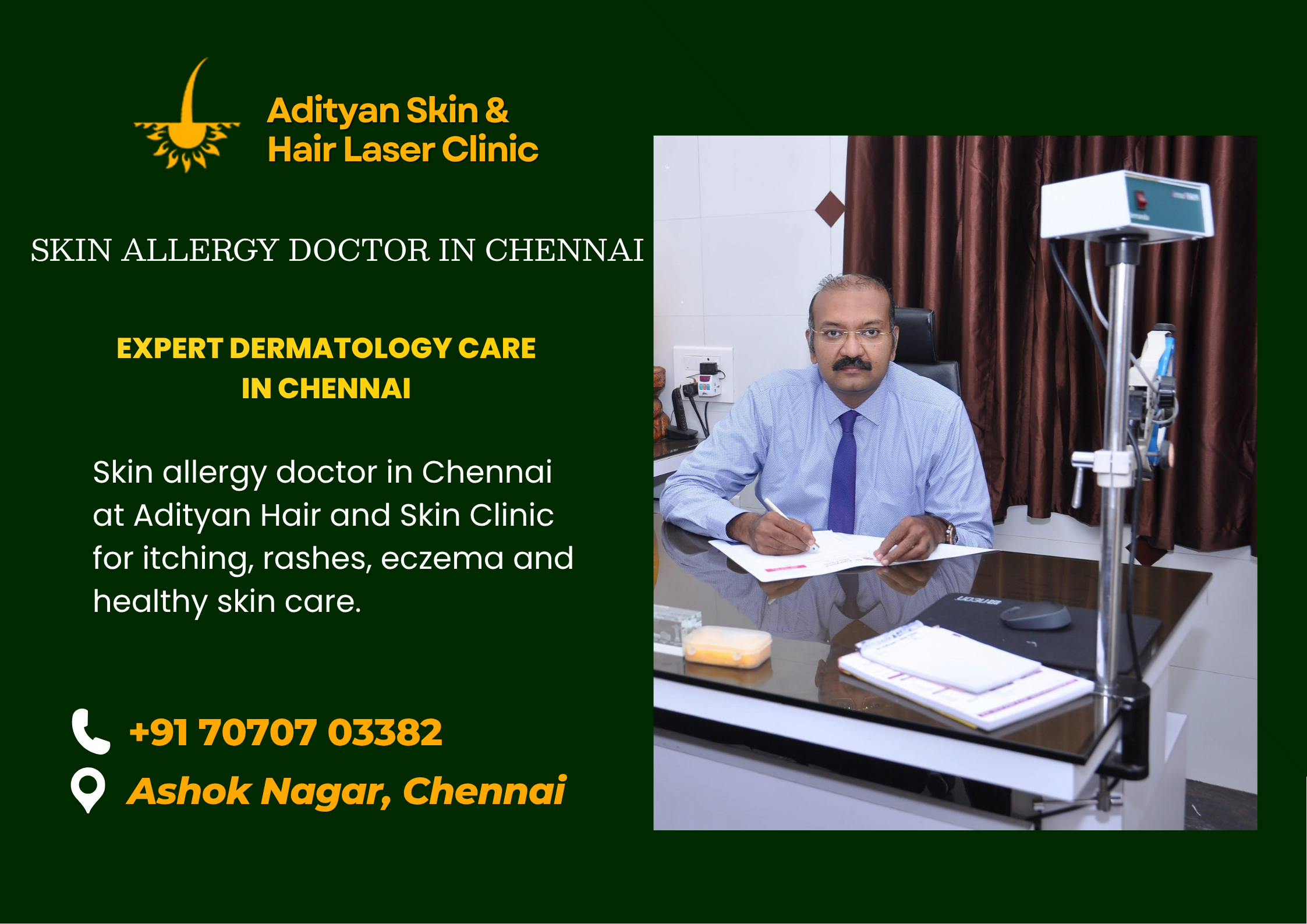
Finding an experienced, board-certified skin allergy doctor in Chennai is one of the most searched healthcare services among people who experience recurring itching, skin rashes, redness, swelling, eczema, hives, or unexplained skin irritation. Allergic dermatological reactions can affect anyone regardless of age and may appear suddenly, even in individuals who have never experienced systemic allergies before. While some acute hypersensitivity reactions disappear within a few hours, others can continue for weeks or keep returning, affecting daily life and psychological confidence. At Adityan Hair and Skin Clinic in Ashok Nagar, Chennai, advanced skin allergy treatment focuses on identifying the specific root cause of the cutaneous allergy, rapidly reducing active inflammation, and providing highly personalized long-term maintenance programs to improve skin health.
Many individuals mistake complex skin hypersensitivity for an ordinary localized rash or minor transient infection. As a direct result, they frequently begin applying random over-the-counter creams purchased from commercial pharmacies or suggested by friends. Unfortunately, treating visible superficial symptoms without understanding the underlying physiological cause often results in aggressive, recurring flare-ups. Every individual's skin reacts entirely differently, which is why a meticulous clinical skin examination plays an indispensably vital role in successful long-term dermatological care.
Adityan Hair and Skin Clinic is located at No.40, 11th Ave, 11th Avenue, Ashok Nagar, Chennai, Tamil Nadu 600083. The specialized practice offers comprehensive clinical and cosmetic dermatology care for chronic skin allergies, eczema, psoriasis, persistent fungal infections, pigmentation disorders, severe acne vulgaris, hair loss, and various other complex hair and skin concerns across all age groups.
Skin allergies have become increasingly common over the last decade. Modern urban lifestyles, vehicle pollution, unpredictable changing weather conditions, an increased use of multi-layered cosmetic products, and daily exposure to industrial chemicals have all contributed to a noticeable rise in allergic skin conditions globally and locally. A dedicated professional can map these shifting factors to individual physiology rather than generic symptom suppression.
The city of Chennai experiences hot, humid weather throughout most of the year. This perpetual environmental heat induces constant sweating, dust exposure, and high pollution levels, which together weaken the natural protective lipid barrier of the epidermal layer. Once this protective barrier becomes structurally damaged, the skin becomes significantly more sensitive to microscopic environmental allergens and harsh chemical irritants.
Many individuals also use multiple skincare formulations concurrently without knowing whether the underlying active formulations are suitable for their unique skin type. Synthetic fragrances, strong chemical preservatives, artificial colors, and harsh surfactant chemicals found in popular consumer products frequently trigger intense contact allergic reactions in sensitive individuals. Furthermore, systemic stress plays an important role; long working hours, lack of deep sleep, and emotional strain weaken the skin’s natural defense mechanisms, making allergic reactions more frequent and intense.
Clinical Note: A weakened skin barrier allows ambient microparticles and pollutants to penetrate deep into the dermis, setting off an aggressive immunological chain reaction that cannot be permanently resolved by over-the-counter soothing lotions alone.
A true biological skin allergy occurs when the body's immune system overreacts to an external or internal substance that it wrongly identifies as harmful. Instead of ignoring the benign substance, the immune system produces an aggressive inflammatory response mediated by histamine and other cytokines, causing visible cutaneous changes. These specific reactions may appear immediately after contact with an allergen or may take several hours or even days to surface, complicating tracking efforts without clinical diagnostics.
The overall clinical severity varies from person to person. Some individuals experience mild, localized itching while others develop widespread erythematous rashes, painful angioedema (swelling), or severe generalized cutaneous irritation. Understanding your personal trigger is one of the most critical steps in preventing future episodes. This is where an advanced clinical framework helps construct an elimination strategy tailored specifically to your daily environment.
Skin allergies can appear in vastly different physical forms depending on the underlying immunological cause. Some patients first notice intense, deep-seated pruritus (itching) that becomes significantly worse throughout the day or night. Others develop small, clustered red bumps (papules) or large raised patches (plaques) across the torso and limbs.
Certain allergic reactions produce incredibly dry, cracked, and peeling skin, while others create fluid-filled blisters (vesicles) that risk rupturing. Swelling around the delicate tissues of the eyes, lips, or hands may also occur in more severe presentations. The affected skin often feels intensely irritated, warm to the touch, and physically uncomfortable. Continuous scratching must be strictly avoided, as it worsens the primary condition and significantly increases the risk of secondary bacterial infections.
Because every individual's immune system responds uniquely, identifying separate environmental and chemical triggers is an important part of clinical management. The following table provides examples of common triggers and the corresponding reactions typically encountered during clinical diagnostics:
| Common Allergy Trigger | Possible Skin Reaction |
|---|---|
| Cosmetics and Makeup | Redness, itching, fine papules, and localized irritation |
| Hair Dye (PPD and additives) | Severe contact dermatitis, burning, and scalp allergy |
| Soaps and Harsh Detergents | Dry, cracked skin, chronic scaling, and raw rashes |
| Dust, Dander, and Urban Pollution | Generalized itching, erythema, and allergic flare-ups |
| Artificial Jewellery (Nickel/Cobalt) | Localized skin redness, swelling, and blistering patches |
Contact dermatitis develops rapidly when the skin reacts directly after touching an irritating substance or a specific allergen. This is one of the most frequently diagnosed skin allergies in modern clinical practice. Common triggers include synthetic perfumes, heavy soaps, commercial detergents, cosmetic formulations, chemical hair colors, base metals such as nickel, and certain rough synthetic fabrics.
The affected area of contact often becomes markedly red, intensely itchy, and edematous. Small blisters or peeling sheets of skin may develop if the hypersensitivity reaction becomes more severe. Individuals working in salons, hospitals, mechanical factories, or industrial cleaning professions are regularly exposed to harsh chemical substances that exponentially increase the risk of occupational contact dermatitis. Early identification of these specific occupational or domestic triggers helps prevent repeated debilitating reactions.
It is clinically important to note that not every itchy rash is caused by a true allergy. Several distinct dermatological conditions produce clinical symptoms that closely resemble acute or chronic allergic reactions. Misdiagnosing these conditions often leads to inappropriate treatment pathways that can cause long-term skin damage or worsen the underlying disease process.
For instance, superficial fungal infections can cause profound redness and itching, but they require targeted antifungal medications rather than anti-allergic treatments. Psoriasis, an autoimmune disorder, often produces thick, silver-scaled patches that can be mistaken for dry allergic eczema. Seborrheic dermatitis affects the oil-rich areas of the body, such as the scalp and face, and may closely resemble localized contact allergy. Heat rash (miliaria) develops because of blocked sweat glands during hot weather and requires cooling strategies instead of intensive immunological treatment. Because these conditions appear so similar to the untrained eye, a proper clinical examination is vital before starting any therapeutic regimen.
Many patients diagnosed with chronic eczema also experience severe concurrent allergic skin reactions. Eczema fundamentally weakens the natural lipid skin barrier, which easily allows ambient irritants and biological allergens to enter the deeper skin layers. The skin becomes chronically dry, itchy, and highly inflamed. Scratching provides brief, temporary relief but physically damages the skin barrier further, creating a cycle of continuous irritation known as the itch-scratch cycle.
Children and adults can both develop various forms of eczema. Although it remains a chronic condition for some individuals, targeted modern skincare and evidence-based dermatology care help reduce the frequency and intensity of flare-ups. Moisturizing the skin regularly with ceramide-dominant formulations and strictly avoiding harsh personal care products are fundamental parts of successful long-term eczema management.
Hives, medically termed urticaria, are raised, intensely itchy wheals or swellings that appear suddenly on the skin surface. They possess a transient nature, meaning individual lesions may completely disappear within a few hours and reappear in entirely different areas of the body. Hives can develop due to direct food allergies, systemic medications, underlying viral infections, emotional stress, or environmental physical triggers like heat and cold.
In many patients experiencing chronic hives, the exact root cause can remain idiopathic or hidden without comprehensive clinical evaluation. Although mild, isolated acute hives often improve on their own, repeated or prolonged episodes require careful medical evaluation by an expert in dermatology to identify possible underlying systemic or autoimmune causes.
Living and commuting in a busy metropolitan city like Chennai exposes the human skin to high levels of suspended particulate matter, vehicle emissions, and harsh environmental pollutants every single day. These microscopic pollutants continually settle on the skin surface throughout the day, generating free radicals and weakening the protective lipid barrier over time.
Once the epidermal barrier is structurally compromised, external allergens penetrate the deeper skin tissue much more easily, causing a marked increase in overall skin sensitivity and hyper-reactivity. Pollution also heavily contributes to cellular oxidative stress, which accelerates baseline inflammation and worsens pre-existing skin conditions like eczema and rosacea. Proper gentle cleansing routines and dermatologist-guided antioxidant skincare help minimize the daily impact of urban pollution on sensitive skin types.
One of the biggest clinical mistakes people make after developing a sudden skin allergy is applying creams or consuming medicines without knowing what actually caused the biological reaction. Many over-the-counter creams contain potent, unregulated topical steroids that temporarily reduce itching or redness by suppressing local immunity. However, they do not address the underlying trigger and can cause profound long-term side effects, including skin thinning, stretch marks, topical steroid addiction, and severe rebound flare-ups.
Modern social media has also drastically increased the popularity of unverified home remedies and DIY skincare treatments. While some natural ingredients may feel mildly soothing, others such as fresh lemon juice, raw baking soda, or undiluted essential oils are highly acidic or basic, and can severely irritate already compromised skin. Applying multiple random products together without proper medical guidance damages the delicate skin barrier and delays natural cellular healing. Instead of experimenting with different products, identifying the scientific reason behind the allergy is the safest, fastest approach to recovery.
Not every skin allergy begins with something applied directly to the outer skin layer. Certain ingested foods can also trigger sudden allergic reactions in sensitive individuals. Foods such as shellfish, peanuts, tree nuts, eggs, cow's milk, soy, wheat, and certain preservatives can produce systemic symptoms ranging from mild localized itching to widespread acute hives. While keeping a detailed food and symptom diary can help identify patterns, patients should avoid cutting out major food groups without medical confirmation, as it can lead to nutritional deficiencies.
Weather changes also play a significant role in altering skin barrier dynamics. Chennai's hot and humid climate increases natural sweating, while sudden seasonal changes can trigger severe dryness or friction irritation in certain individuals. Excessive sweating worsens localized itching and increases skin friction, particularly around the neck, underarms, and major skin folds. Protecting the skin from harsh environmental conditions using loose clothing and barrier-repairing creams is a central pillar of allergy prevention.
Implementing simple, scientifically grounded daily habits plays an important role in maintaining healthy, resilient skin. Consider adopting the following routine adjustments:
Some allergic skin conditions occur only once in a lifetime, while others become chronic, returning repeatedly over several months or years. Chronic allergies require long-term structured management rather than short-term emergency treatments. Patients benefit immensely from understanding their individual triggers and making permanent, positive lifestyle changes. Additionally, managing daily stress through regular exercise, adequate sleep, and relaxation techniques helps lower inflammatory cytokine levels, thereby reducing the frequency of stress-induced allergy flare-ups.
If you are struggling with recurring skin rashes or need expert clinical guidance to manage your skin health, consider visiting a dedicated facility. For advanced, personalized diagnostic evaluations and comprehensive management plans, you can consult a professional team at Adityan Hair and Skin Clinic.
Clinic Address:
No.40, 11th Ave, 11th Avenue,
Ashok Nagar, Chennai, Tamil Nadu 600083
Phone: 070707 03382
Adityan Hair and Skin Care Clinic offers advanced skin, hair, and laser treatments in Ashok Nagar, Chennai. Trusted specialists, modern care, lasting results.