

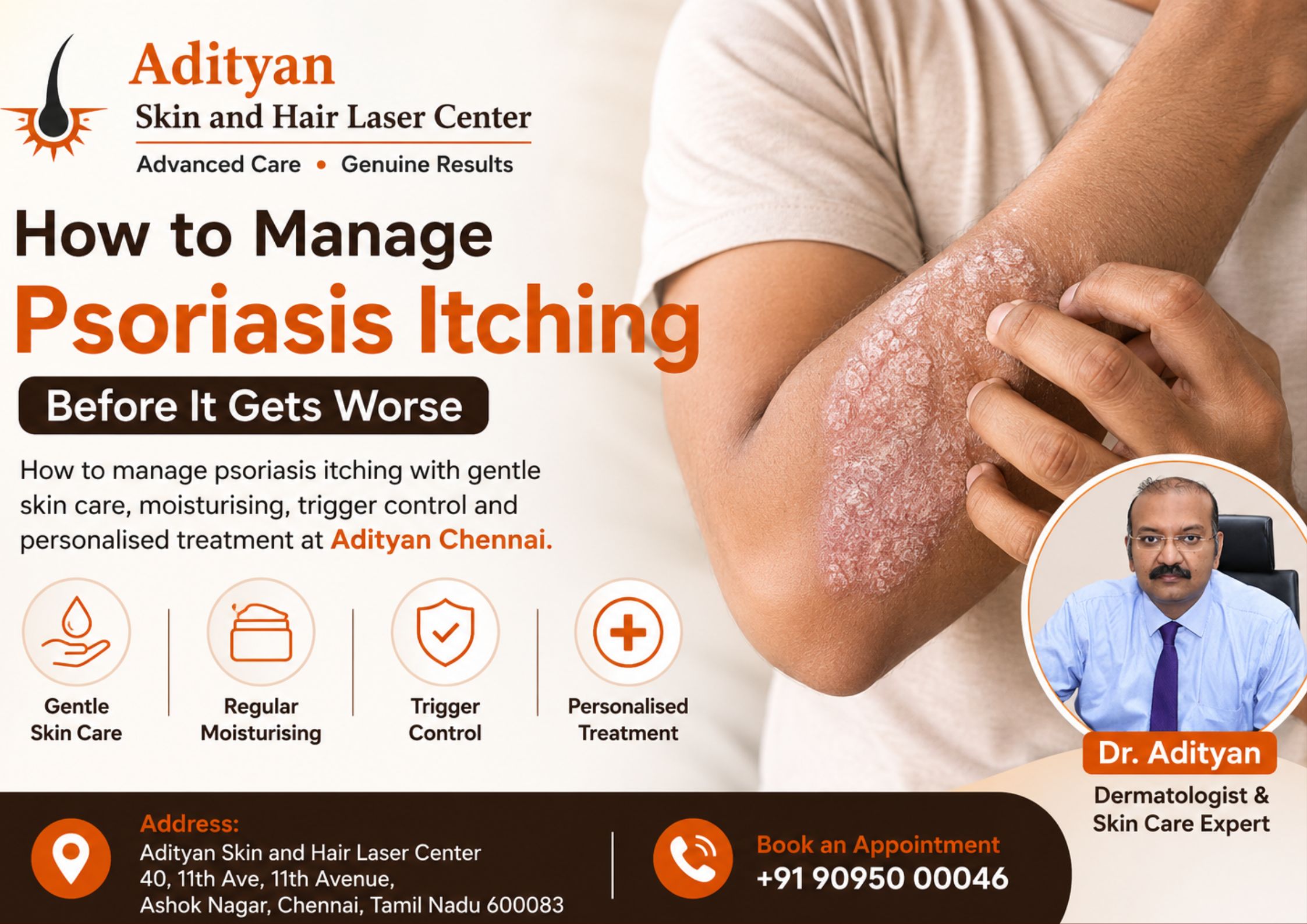
Learning how to manage psoriasis itching can make everyday life more comfortable and help protect the skin from cracking, bleeding and further irritation. Psoriasis itching may disturb sleep, reduce concentration and create a powerful urge to scratch affected areas. At Adityan Skin and Hair Laser Center in Ashok Nagar, Chennai, psoriasis care begins with understanding the type, severity, location, previous treatments and possible triggers before a personalised treatment plan is recommended.
Psoriasis is a long-term inflammatory condition in which an overactive immune response causes skin cells to multiply more quickly than usual. These cells build up on the surface and form dry, thick and scaly patches that may itch, burn or feel painful. Psoriasis commonly affects the scalp, elbows, knees, lower back and trunk, but it may develop on almost any area of the body.
How to Manage Psoriasis Itching With the Right Daily Care
The most effective way to reduce psoriasis itching is to manage the underlying inflammation. Itching may continue when plaques remain dry, thick, irritated and active. Dermatology-guided treatment can help reduce scaling, redness, discomfort and the repeated urge to scratch. The exact approach depends on the type of psoriasis, the areas affected and how severe the symptoms have become.
Daily care remains important because dryness can intensify itching even when treatment has started. A routine that protects moisture, limits friction and avoids aggressive scratching can support medical treatment. It can also help make flare-ups easier to manage between clinic visits.
Think of psoriasis-prone skin like a protective wall with damaged gaps. Moisturiser helps fill those gaps, gentle washing prevents further damage and psoriasis treatment helps calm the inflammation underneath. All three parts work together to reduce discomfort.
Why Psoriasis Itching Can Become So Intense
Psoriasis plaques are often dry, inflamed and covered with scales. When the natural skin barrier becomes weak, moisture escapes more easily. The affected area may then feel tight, rough and uncomfortable. Inflammation can also stimulate nerve signals that create an itching or burning sensation.
Scratching may provide very brief relief, but it can damage the surface and increase inflammation. This creates an itch-scratch cycle in which itching leads to scratching, scratching damages the skin and damaged skin becomes even itchier.
Repeated scratching may cause thickened skin, bleeding, small cuts or open areas. Damaged skin may also become more vulnerable to infection. Scratching or removing scales forcefully may trigger further irritation around the affected patch.
The intensity of itching differs from one person to another. Some people experience occasional mild irritation, while others find itching to be the most difficult part of psoriasis. Scalp psoriasis, lower-leg psoriasis and psoriasis in body folds can be particularly uncomfortable because of sweat, friction and limited airflow.
Moisturising Helps Support the Skin Barrier
Moisturising is one of the simplest and most useful ways to reduce dryness. Thick, fragrance-free creams and ointments usually retain moisture better than thin lotions. Applying moisturiser after bathing and whenever the skin feels dry may soften scales and reduce tightness.
Moisturiser should be spread gently rather than rubbed aggressively into active plaques. Applying it while the skin is slightly damp helps seal water into the surface. This may make the skin feel softer and reduce the immediate urge to scratch.
Keeping a suitable moisturiser nearby can be helpful during work, travel and bedtime. When itching begins, gently applying moisturiser or pressing the area through soft clothing may be safer than scratching with fingernails.
How to Manage Psoriasis Itching During Daily Activities
Daily activities such as bathing, dressing, working in an air-conditioned room and sleeping can influence itching. Small adjustments may reduce unnecessary irritation and make the skin feel calmer throughout the day.
Keep Showers Short and Use Warm Water
Long, hot showers can remove protective oils and increase dryness. Comfortably warm water is usually gentler for psoriasis-prone skin. Short showers are often better than remaining under hot water for a long time.
Use a mild cleanser only where needed. Avoid rough bath sponges, strong soaps and vigorous towel drying. After bathing, pat the skin gently and apply moisturiser before the surface becomes completely dry.
Use Cooling Methods for Temporary Comfort
A cool, damp cloth placed over an itchy area may provide temporary relief. Cooling can reduce the immediate urge to scratch without causing physical damage to the plaque.
Any new cooling or itch-relief product should first be tested on a small area. Stop using it if burning, excessive redness or increased irritation develops.
Avoid Scratching and Protect the Skin
Keeping fingernails short and smooth may reduce accidental injury. Soft, breathable clothes can limit friction when psoriasis affects the waist, arms, legs or skin folds.
Instead of scratching, gently press the itchy area or place a cool cloth over it. These alternatives may help break the itch-scratch cycle.
Psoriasis Itch-Relief Habits Compared
| Helpful Psoriasis Care | Habits That May Worsen Itching |
|---|---|
| Applying a fragrance-free moisturiser regularly | Leaving plaques dry for long periods |
| Taking short showers using comfortably warm water | Using very hot water or bathing for too long |
| Patting the skin gently after bathing | Rubbing the skin with rough towels or scrubs |
| Using a cool, damp cloth for temporary comfort | Scratching plaques with fingernails |
| Following the recommended treatment consistently | Frequently stopping, restarting or changing treatment |
Why Psoriasis May Feel Itchier at Night
Night-time itching may feel stronger because the body is warmer, the skin may be drier and there are fewer distractions. When a person is trying to sleep, even mild irritation can feel more noticeable.
Applying moisturiser before bedtime may reduce dryness. Loose cotton clothing and a comfortable room temperature can also limit sweating and friction. Bedding should feel soft against the skin, and fragranced laundry products should be avoided if they appear to cause irritation.
Keeping nails short is especially useful at night because scratching can happen without full awareness during sleep. Some people find that wearing soft cotton gloves reduces accidental skin damage.
Identify Personal Psoriasis Triggers
Psoriasis triggers are not identical for everyone. Stress, skin injury, infections, weather changes and certain medicines may contribute to flare-ups in some individuals. A trigger for one patient may not affect another person in the same way.
Keeping a simple record of when itching becomes worse can help identify patterns. A person may notice increased irritation after hot showers, poor sleep, stressful periods, fragranced products or long hours in dry air-conditioned rooms.
Recognising these patterns makes it easier to adjust daily routines. This approach is more useful than repeatedly trying random home remedies without understanding the cause of the flare-up.
Stress, Sleep and Psoriasis Itching
Stress does not affect every patient in the same way, but it may contribute to flare-ups in some people. Stress may also make itching feel more intense because the body becomes more alert to discomfort.
A regular sleep routine, gentle physical activity and calming bedtime habits may support overall well-being. The goal is not to claim that stress control alone can treat psoriasis, but to reduce one possible factor that may worsen symptoms.
Poor sleep and itching can form another cycle. Itching disturbs sleep, and tiredness may make it harder to manage discomfort the next day. Treating active psoriasis and improving bedtime skin care can help break this pattern.
Medical Treatment for Persistent Psoriasis Itching
Moisturisers support the skin barrier, but persistent itching often improves only when active psoriasis is controlled. Treatment may include emollients, topical medicines, light-based therapy or medicines that work throughout the body, depending on the severity and extent of the condition.
Topical corticosteroids may reduce redness, inflammation, scaling and itching, but the strength and duration must suit the affected body area. A product appropriate for thick plaques on the elbows may not be suitable for thinner skin on the face or body folds.
Treatment for scalp psoriasis may involve specially selected shampoos, solutions, lotions or prescribed applications because hair can make ordinary creams difficult to use. Palms, soles, nails and skin folds may also need different approaches.
Using another person’s prescription or repeatedly applying strong creams without assessment may create avoidable problems. A personalised treatment plan considers the body area, plaque thickness, sensitivity, age and previous response to treatment.
Scalp Psoriasis Itching Needs Special Care
Scalp psoriasis may cause thick scales, flakes, redness and intense itching. Scratching the scalp with fingernails may break the skin and increase irritation. Forcefully removing attached scales may also cause bleeding.
Hair products should be selected carefully because fragrance, alcohol or harsh cleansing agents may irritate the scalp. Gentle washing and prescribed scalp treatments can help loosen scales and reduce inflammation.
Scalp psoriasis is different from ordinary dandruff, even though both may cause flakes. A proper assessment helps avoid using products that are too harsh or not suitable for the condition.
Protect Cracked or Bleeding Psoriasis Plaques
Cracked or bleeding plaques should be handled gently. Repeated washing, rubbing or scratching may delay healing. Applying the recommended moisturiser and avoiding friction can help protect the affected area.
Open, painful or weeping areas require attention because they may indicate significant irritation or possible infection. Increasing redness, warmth, swelling or discharge should not be ignored.
When Psoriasis Itching Needs Prompt Attention
Psoriasis should be reviewed when itching becomes severe, suddenly worsens or regularly interrupts sleep. Cracked, painful, bleeding or weeping plaques also need assessment. Widespread redness, fever or rapidly changing symptoms should not be ignored.
Joint pain, swelling, stiffness or reduced movement may indicate that psoriasis is affecting more than the skin. Early identification is important because psoriasis-related joint inflammation can become more difficult to manage when treatment is delayed.
Common Mistakes That May Worsen Psoriasis Itching
Scrubbing plaques to remove scales is a common mistake. Psoriasis scales are attached to inflamed skin, so aggressive rubbing may cause bleeding and increase irritation.
Frequently changing creams can also make it difficult to understand what is working. Some treatments need consistent use before improvement becomes visible. Stopping treatment as soon as symptoms improve may allow the flare-up to return.
Using fragranced soaps, perfumes or cosmetic products directly on plaques may cause burning or dryness. Similarly, very tight clothing can rub repeatedly against affected skin and make itching worse.
Home remedies that contain strong ingredients may irritate already sensitive skin. Natural does not automatically mean safe, especially when the skin barrier is damaged.
How Long Does Psoriasis Itching Take to Improve?
The timeline depends on how active the psoriasis is, the body area involved, previous treatments and how consistently the recommended plan is followed. Moisturising may provide short-term comfort, but controlling inflammation usually takes longer.
Some people notice gradual relief within days or weeks, while more severe or widespread psoriasis may require longer treatment and regular follow-up. Progress should be measured by reduced itching, softer plaques, less scaling and fewer interruptions to sleep and daily activities.
Psoriasis may go through periods of improvement and flare-ups. Long-term management therefore focuses on maintaining control rather than expecting every symptom to disappear permanently after one treatment.
Why Choose Adityan Skin and Hair Laser Center?
At Adityan Skin and Hair Laser Center, psoriasis care begins with a detailed review of the plaques, affected body areas, itching intensity, previous medicines, lifestyle factors and possible triggers.
The aim is to reduce inflammation, relieve discomfort and create a practical long-term plan. Regular follow-up allows treatment to be adjusted as the condition changes. Patients also receive guidance on bathing, moisturising and protecting sensitive skin between visits.
Learn more about available skin treatments and clinic services by visiting the Adityan Skin and Hair Laser Center website.
For a general overview of the medical speciality that focuses on skin, hair and nail conditions, read this page about dermatology.
Frequently Asked Questions
1. Can moisturiser completely stop psoriasis itching?
Moisturiser can reduce dryness, soften scales and provide comfort, but active inflammation may require psoriasis-specific treatment for better control.
2. Is hot water good for itchy psoriasis?
No. Hot water may remove protective oils, increase dryness and make itching worse. Short showers using comfortably warm water are generally gentler.
3. Can I scratch psoriasis scales away?
Scratching or forcibly removing scales can damage the skin, cause bleeding and increase irritation. Scales should be managed gently with appropriate care.
4. Why does psoriasis itch more at night?
Heat, dryness and fewer distractions may make itching feel stronger at night. Moisturising before bedtime and maintaining a comfortable room temperature may help.
5. Is scalp psoriasis itching treated differently?
Scalp psoriasis may require specially selected shampoos, solutions, lotions or prescribed applications because hair can make ordinary creams difficult to apply.
Visit Adityan Skin and Hair Laser Center – Ashok Nagar
For personalised psoriasis care, itching management and guidance on protecting sensitive skin, visit Adityan Skin and Hair Laser Center in Ashok Nagar, Chennai.
Clinic Address
Adityan Skin and Hair Laser Center
40, 11th Ave, 11th Avenue,
Ashok Nagar, Chennai, Tamil Nadu 600083