

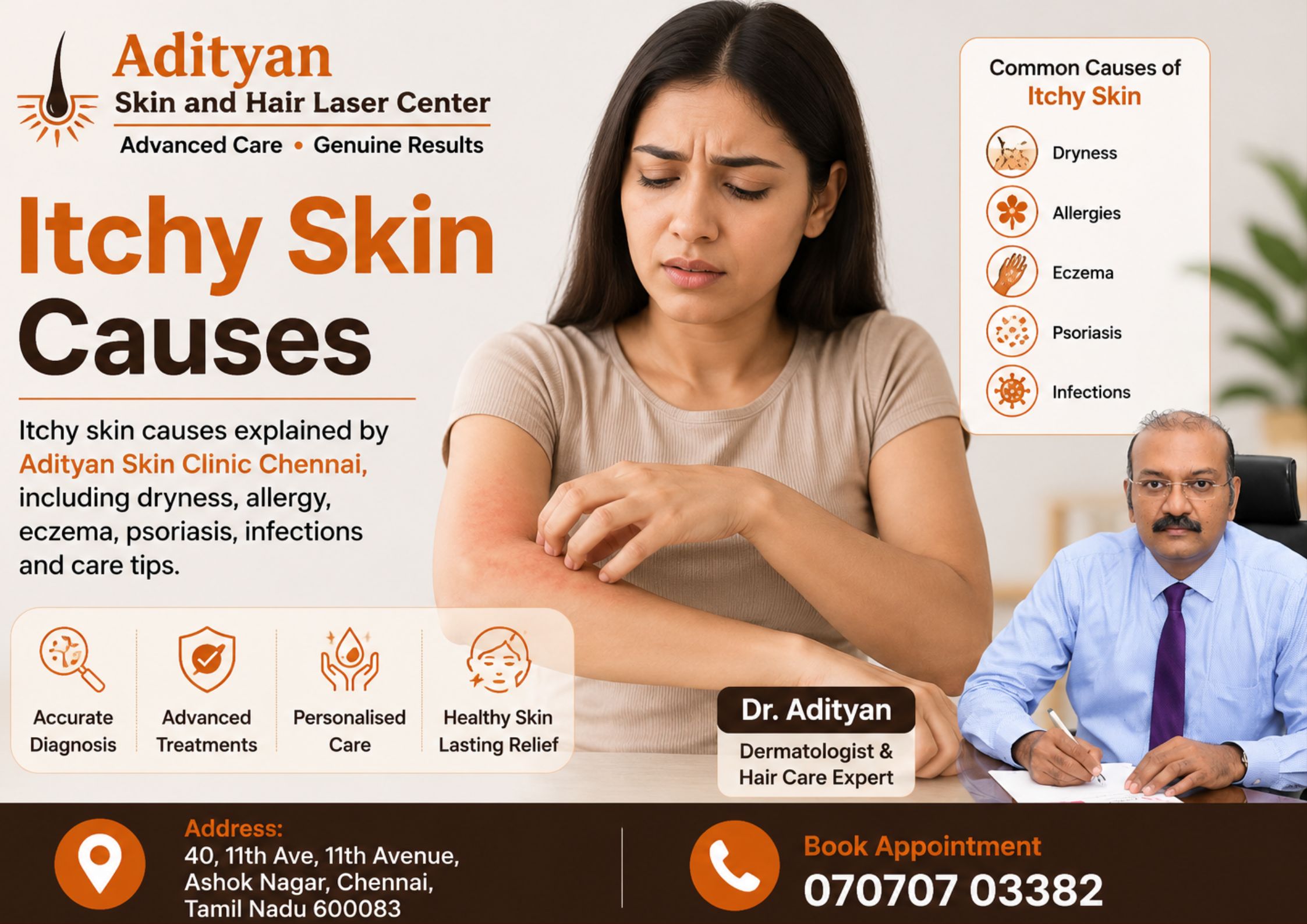
Itchy skin causes can range from simple dryness and irritation to eczema, allergies, psoriasis, fungal infections and other skin conditions. An occasional itch may be harmless, but itching that keeps returning, spreads across the body, affects sleep or creates visible rashes deserves closer attention. At Adityan Skin and Hair Laser Center in Ashok Nagar, Chennai, itchy skin is assessed by looking at the affected area, duration, appearance, possible triggers and associated symptoms before a suitable treatment approach is planned.
Itchy skin is also known as pruritus. Sometimes the skin looks completely normal, while in other cases it may appear rough, dry, inflamed, scaly, swollen or covered with bumps. Repeated scratching can damage the surface and create thicker, darker or broken areas that become even more uncomfortable.
Understanding the Most Common Itchy Skin Causes
Itching is a symptom rather than one specific disease. It can begin when the protective skin barrier becomes dry or damaged, when inflammation develops or when the immune system reacts to a substance. Infections, insects, heat and long-term skin conditions can also trigger itching.
The location and appearance of the itch can provide useful clues. Itching limited to one small area may relate to an insect bite, product reaction or local infection, while itching affecting several areas may be connected to widespread dryness, eczema, hives or another skin condition.
Scratching may feel good for a few seconds, but it can create an itch-scratch cycle. The more the skin is scratched, the more irritated it becomes, and irritated skin can create an even stronger urge to scratch.
Dryness, Eczema and Other Common Itchy Skin Causes
Dry Skin
Dry skin is one of the most common reasons for itching. It may feel tight, rough or flaky and can become more noticeable after bathing or spending long hours in air-conditioned rooms.
Very hot water, harsh soap and frequent cleansing may remove natural oils from the skin. Regular use of a suitable fragrance-free moisturiser can help support the protective barrier and reduce dryness-related irritation.
Eczema and Atopic Dermatitis
Eczema is an inflammatory skin condition that can cause significant itching, dryness and irritation. The patches may become rough, scaly or thickened when they are scratched repeatedly.
On brown skin, inflammation may not always look bright red. It can sometimes appear darker, greyish, purple or uneven in colour. Treatment focuses on calming inflammation, maintaining moisture and reducing known triggers.
Contact Dermatitis
Contact dermatitis develops when something touching the skin causes irritation or an allergic reaction. Soaps, detergents, perfumes, cosmetics, jewellery, hair products and cleaning chemicals can all trigger symptoms in sensitive people.
When itching begins shortly after using a new product, the timing can provide an important clue. Continuing to use the trigger may make the reaction worse.
Psoriasis
Psoriasis can cause thick, scaly plaques that may itch, burn or feel uncomfortable. It commonly affects the scalp, elbows, knees and trunk but can appear elsewhere.
Psoriasis is not simply dry skin. Moisturiser can help with dryness, but active inflammation may require treatment chosen according to the area affected and severity of the condition.
Hives and Allergic Reactions
Hives may appear as raised, swollen and intensely itchy patches. They can develop suddenly and may be linked to foods, medicines, infections, heat, pressure or other triggers.
The exact cause is not always easy to identify. Noting when the rash appears, what was eaten or used beforehand and how long it lasts can help during evaluation.
Fungal Skin Infections
Fungal infections such as ringworm and athlete's foot can create persistent itching. Ringworm may appear as a spreading, scaly patch, while athlete's foot often causes peeling, cracking and irritation between the toes.
These conditions require treatment aimed at the infection itself rather than only applying moisturiser or anti-itch products.
Heat, Sweat, Insect Bites and Friction
Heat rash may occur when sweat becomes trapped in the skin, creating small itchy or prickly bumps. Tight clothing and repeated friction can also make sensitive areas uncomfortable, particularly around the neck, underarms, waistline and skin folds.
Insect bites can produce localised raised bumps, swelling and itching. Mosquitoes, bedbugs and other insects may cause reactions that vary from person to person.
Common Itchy Skin Causes Compared
| Possible Cause | Typical Clues |
|---|---|
| Dry skin | Tight, rough or flaky skin, sometimes without a visible rash |
| Eczema | Dry, inflamed and intensely itchy patches |
| Contact dermatitis | Itching after exposure to soaps, cosmetics, jewellery or chemicals |
| Psoriasis | Thick scaly plaques with itching or burning |
| Hives | Raised itchy bumps or swollen patches appearing suddenly |
| Fungal infection | Scaly, spreading or ring-shaped itchy patches |
| Heat rash | Small itchy or prickly bumps after sweating |
| Insect bites | Localised itchy bumps that may appear in groups |
This comparison provides general guidance only because several skin conditions can look similar. The appearance, location, duration and triggers all help identify the possible cause.
How to Manage Itchy Skin and Protect the Skin Barrier
Why Scratching Can Make the Problem Worse
Repeated scratching damages the protective outer layer of the skin. Once the surface becomes irritated, inflammation can increase and the itching may feel stronger.
Over time, repeated scratching may lead to thicker skin, colour changes, bleeding or small wounds. Broken skin can also make it easier for bacteria to enter.
Daily Skin Care for Itching
Use comfortably warm water instead of very hot water. Choose a gentle cleanser and avoid rough scrubbing with brushes or hard bath sponges.
After bathing, pat the skin dry rather than rubbing it. Applying a fragrance-free moisturiser while the skin is still slightly damp can help reduce water loss and support the skin barrier.
Loose, breathable clothing may be more comfortable when heat, sweat or friction makes itching worse. Keeping fingernails short can also reduce accidental damage from scratching.
When Itchy Skin Needs Closer Attention
Do Not Ignore Persistent or Severe Itching
Itching deserves closer assessment when it lasts for several weeks, repeatedly returns, becomes severe or regularly interrupts sleep.
Skin irritation accompanied by spreading redness, swelling, pain, pus, open sores or significant colour changes should also be evaluated. Some people experience itching without a visible rash, so the absence of obvious redness does not always identify the cause.
Why Choose Adityan Skin and Hair Laser Center?
At Adityan Skin and Hair Laser Center, itchy skin care begins with examining the affected area and understanding when symptoms started, what makes them worse and which treatments or products have already been used.
The aim is to identify whether the main concern is dryness, eczema, allergy, psoriasis, fungal infection, irritation or another skin condition before choosing treatment.
Learn more about skin-care services and treatments by visiting the Adityan Skin and Hair Laser Center website.
For general information about the medical speciality that focuses on skin, hair and nail conditions, read this overview of dermatology.
Frequently Asked Questions
1. Why is my skin itching even without a rash?
Dry skin is a common reason for itching without an obvious rash, but other skin or health conditions may also cause similar symptoms. Persistent itching needs assessment based on its duration, location and associated symptoms.
2. Can dry skin cause severe itching?
Yes. Very dry skin may feel tight, rough and intensely itchy. Regular moisturising and avoiding very hot water can help reduce dryness-related irritation.
3. Can allergies cause itchy skin?
Yes. Allergic reactions may cause hives, swelling or itchy rashes. Cosmetics, fragrances, jewellery and household products can also trigger allergic contact dermatitis.
4. Why does itching feel worse at night?
Dryness, warmth and fewer distractions may make itching feel more noticeable at night. Some skin conditions may also naturally become more uncomfortable during this time.
5. Can scratching lead to skin infection?
Yes. Repeated scratching can break the skin surface. These open areas may allow bacteria to enter and increase the risk of infection.
Visit Adityan Skin and Hair Laser Center – Ashok Nagar
For persistent itching, rashes, dry patches, scaling, eczema, psoriasis or other skin concerns, visit Adityan Skin and Hair Laser Center in Ashok Nagar, Chennai.
Clinic Address
Adityan Skin and Hair Laser Center
40, 11th Ave, 11th Avenue,
Ashok Nagar, Chennai, Tamil Nadu 600083
Phone:
070707 03382