

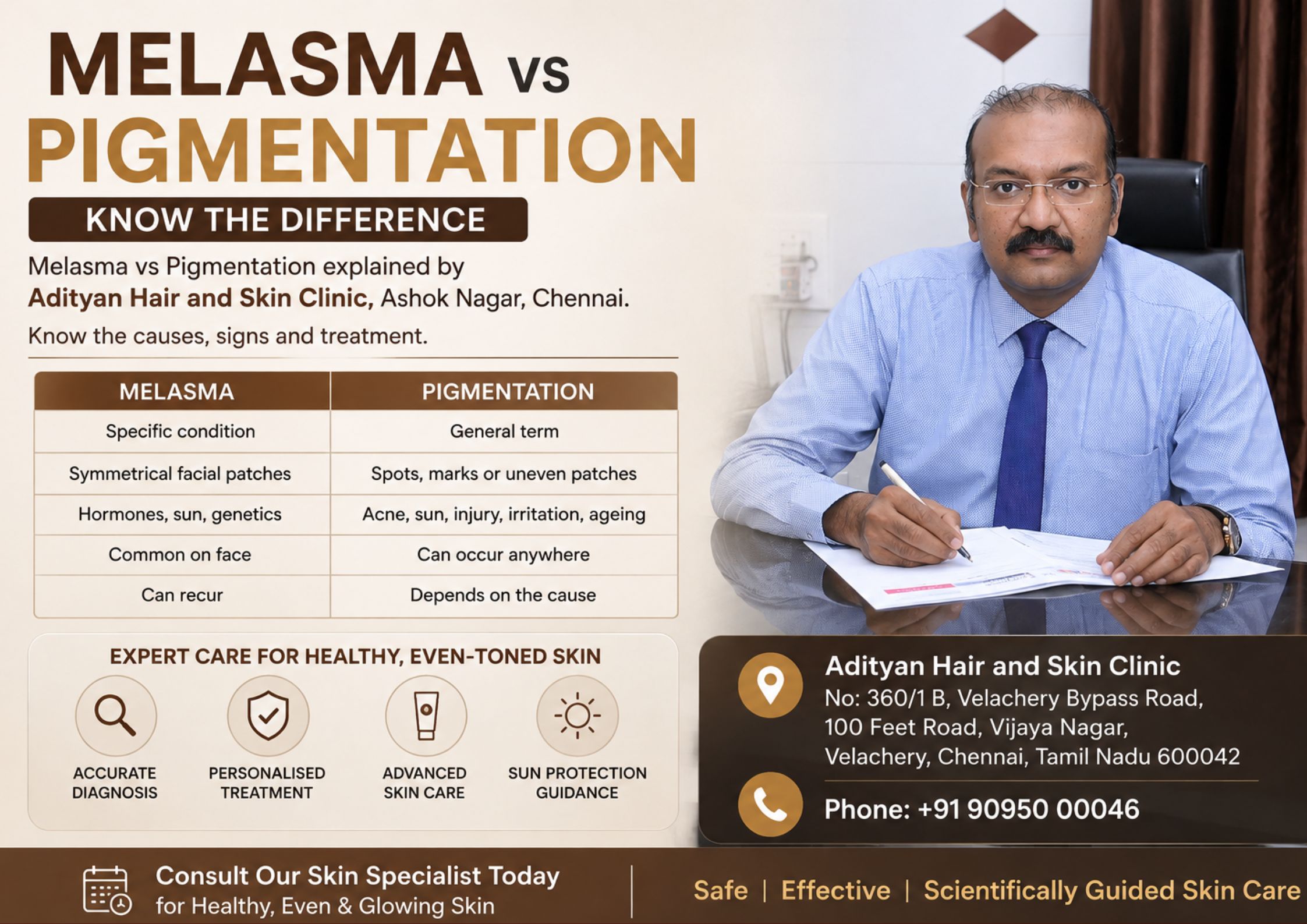
Melasma vs Pigmentation: Why the Right Diagnosis Matters for Clearer Skin
Melasma vs Pigmentation is an important comparison for anyone noticing brown patches, dark marks or uneven skin tone on the face. Although these terms are often used to describe the same problem, they are not identical. Pigmentation is a broad term for changes in skin colour caused by variations in melanin, while melasma is a specific pigmentation condition that commonly creates symmetrical brown or grey-brown patches on the face. At Adityan Hair and Skin Clinic in Ashok Nagar, Chennai, skin evaluation focuses on identifying the pattern, possible cause and individual skin type before a personalised treatment plan is considered.
Understanding the difference matters because a skincare product or procedure suitable for one type of dark mark may not be appropriate for another. Acne marks, sun-related spots, irritation-related darkening and hormone-linked facial patches can initially look similar. Correct identification helps reduce unnecessary product experiments and allows treatment to focus on the actual condition.
Melasma vs Pigmentation: Understanding the Main Difference
Pigmentation refers to any noticeable change in the normal colour of the skin. Skin colour is largely influenced by melanin, which is produced by cells known as melanocytes. When these cells produce or distribute more melanin in a particular area, the skin can appear darker. This is commonly called hyperpigmentation.
Changes in pigmentation may develop after sun exposure, acne, eczema, skin injury, irritation, hormonal activity or ageing. This means pigmentation is not one single disease. It is an umbrella term that includes several different conditions.
Melasma is one of those conditions. It commonly appears as flat brown or grey-brown patches on the cheeks, forehead, bridge of the nose, upper lip or chin. The patches are often visible on both sides of the face in a fairly symmetrical pattern.
Melasma vs Pigmentation: Quick Comparison
| Feature | Melasma | General Pigmentation |
|---|---|---|
| Meaning | A specific pigmentation condition. | A broad term for changes in skin colour. |
| Appearance | Usually brown or grey-brown facial patches. | May appear as spots, marks or uneven patches. |
| Common Areas | Cheeks, forehead, nose, upper lip and chin. | Can occur on the face or other body areas. |
| Common Triggers | Hormonal changes, sunlight and genetic tendency. | Acne, inflammation, injury, sunlight, irritation or ageing. |
| Pattern | Often symmetrical. | Depends on the underlying cause. |
| Recurrence | May return after improvement. | Depends on the type and trigger. |
How Dermatologists Identify the Real Cause of Dark Patches
The appearance of dark patches alone may not always provide a definite diagnosis. A dermatologist may examine their location, colour, pattern, borders, duration and possible triggers. Previous acne, pregnancy, hormonal changes, sun exposure, skincare products and medical history can provide useful clues.
This assessment is important because treatment should match the underlying condition instead of simply trying to remove visible colour. For example, a person with acne-related pigmentation may first need active acne to be controlled, while a person with melasma may need greater attention to trigger control, sun protection and long-term maintenance.
What Causes Melasma?
Melasma usually develops through a combination of factors rather than one single cause. Hormonal influences are commonly associated with the condition, which is why it may become noticeable during pregnancy or other periods of hormonal change. Certain people may also have a genetic tendency to develop it.
Sun exposure is another major trigger. Ultraviolet radiation can stimulate melanocytes to produce more pigment, making existing patches darker. This explains why melasma may become more noticeable after frequent outdoor exposure.
Melasma can return even after visible improvement, so long-term management commonly includes daily sun protection and a consistent skincare routine suited to the patient's skin.
What Causes Other Forms of Pigmentation?
General pigmentation may develop whenever melanin production changes. A common example is post-inflammatory hyperpigmentation. When a pimple, eczema flare, skin allergy, burn or injury heals, a brown mark may remain because the inflammation stimulates additional pigment production.
Repeated sunlight can also create sun-related pigmentation over time. Aggressive skincare may contribute too. Strong scrubs, repeated friction or unsuitable active ingredients can irritate the skin and create further darkening.
Acne Marks Are Not Always Melasma
Dark marks that remain after acne are commonly mistaken for melasma. Post-acne pigmentation usually appears where individual pimples previously developed. The marks may be scattered across the cheeks, forehead, chin or jawline.
Melasma tends to create broader patches and often follows a symmetrical facial pattern. A person can also have acne-related marks and melasma at the same time, making professional evaluation especially useful.
Why Sun Protection Is Essential
Sunlight can worsen many pigmentation concerns. Ultraviolet radiation stimulates melanin as part of the skin's natural defence mechanism. When excess pigment is already present, repeated exposure may make dark areas more visible.
Daily sunscreen therefore plays an important role in managing facial pigmentation. Consistent use also helps preserve improvements achieved through dermatologist-guided skincare or procedures.
Important: Pigmentation treatment works better when new darkening is prevented. Sun protection, gentle skincare and avoiding unnecessary skin irritation are important parts of long-term management.
Treatment Depends on the Type of Pigmentation
There is no single treatment suitable for every dark patch. Depending on the diagnosis and skin type, a dermatologist may recommend topical products that help support skin renewal or regulate excess pigment production.
Selected patients may also be considered for procedures such as chemical peels or other dermatological treatments. Melasma requires particular care because overly aggressive treatment can irritate the skin and sometimes cause additional darkening.
Why Home Remedies May Make Pigmentation Worse
People often try lemon juice, strong scrubs, fairness creams or multiple brightening serums hoping for faster improvement. These methods can damage the skin barrier and cause inflammation.
Inflammation itself can stimulate further pigmentation, particularly in brown skin. A gentle routine that protects the barrier is usually a safer foundation than repeatedly changing strong products.
Why Personalised Treatment Matters
Skin tone, sensitivity, pigmentation depth, medical history and lifestyle all influence treatment. A routine appropriate for mild post-acne marks may not be suitable for long-standing melasma.
Individual Skin Evaluation
The pattern, colour, duration, sensitivity and likely causes are assessed before treatment begins.
Cause-Based Care
Treatment is planned according to whether the darkening is linked to melasma, acne, sun exposure, irritation or another factor.
Why Choose Adityan Hair and Skin Clinic in Ashok Nagar?
At Adityan Hair and Skin Clinic, pigmentation care begins with understanding the patient's skin instead of assuming every dark patch has the same cause. The dermatologist reviews the pigmentation pattern, skin type, sensitivity, skincare history and possible triggers before planning suitable care.
This personalised approach is particularly important for melasma because maintaining improvement may require consistent sun protection, appropriate skincare and regular follow-up.
Learn more about the clinic's dermatology and skin-care services through the official Adityan Hair and Skin Clinic Ashok Nagar website.
General Dermatology Reference
For general educational information about the medical field covering skin, hair and nail conditions, read this overview of dermatology.
Conclusion
Understanding the difference between melasma and general pigmentation helps explain why similar-looking dark patches may require different approaches. Pigmentation is the broader term for changes in skin colour, while melasma is a particular facial condition commonly influenced by hormonal activity, genetics and sunlight.
At Adityan Hair and Skin Clinic in Ashok Nagar, Chennai, patients receive individual skin evaluation and personalised guidance based on their condition. Correct diagnosis, sun protection, suitable skincare and consistent follow-up can support clearer and more even-looking skin.
Frequently Asked Questions
1. Is melasma the same as pigmentation?
No. Pigmentation is a broad term describing changes in skin colour, while melasma is a specific type of hyperpigmentation that usually causes symmetrical facial patches.
2. How can I tell whether I have melasma or another type of pigmentation?
Melasma often appears as broader symmetrical patches across the cheeks, forehead or upper lip. Other pigmentation may occur as individual marks after acne, inflammation, injury or sun exposure. A skin evaluation can help identify the difference.
3. Can sunlight make melasma worse?
Yes. Sunlight stimulates melanin production and may make existing melasma more noticeable. Consistent sun protection is therefore important.
4. Do acne marks count as pigmentation?
Yes. Dark marks remaining after acne can be a form of post-inflammatory hyperpigmentation caused by increased pigment production during healing.
5. Can melasma return after treatment?
Yes. Melasma may recur because sunlight, hormonal influences and genetic susceptibility can continue to affect melanin production. Maintenance care helps manage recurrence.
Adityan Hair and Skin Clinic – Ashok Nagar
Address:
No. 40, 11th Avenue,
Ashok Nagar, Chennai,
Tamil Nadu – 600083
Phone: 070707 03382
Book a Skin Consultation